
Welcome to LexCall
Verified Legal Advisory Across India
Poison in the Pump: India’s Hidden Uranium-in-Water Problem
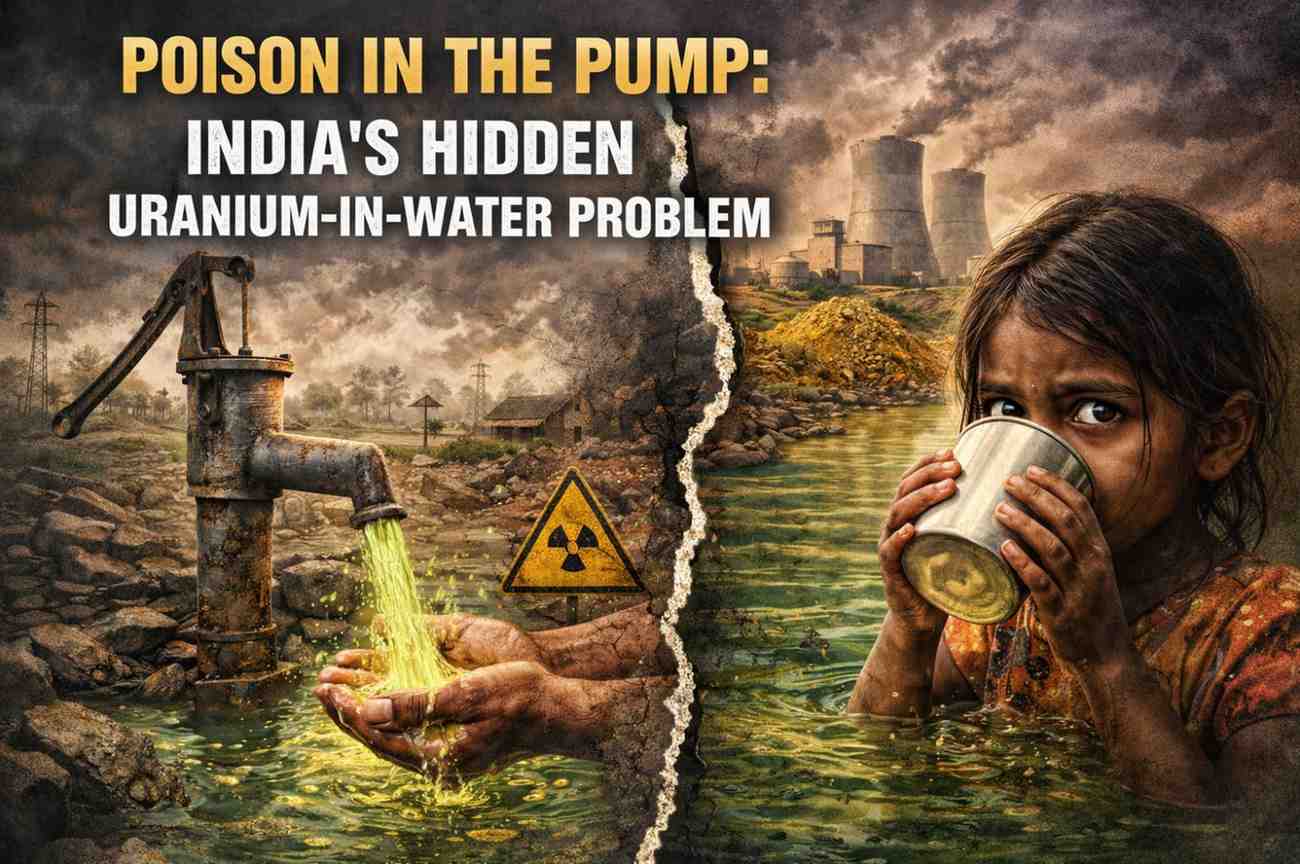
The discovery of uranium in groundwater across parts of North India, including Delhi, Punjab and Haryana, has become one of those uncomfortable truths we cannot ignore anymore.
Share on social media
About Poison in the Pump: India’s Hidden Uranium-in-Water Problem
The discovery of uranium in groundwater across parts of North India, including Delhi, Punjab and Haryana, has become one of those uncomfortable truths we cannot ignore anymore. According to the latest Central Ground Water Board (CGWB) Annual Ground Water Quality Report 2025, a significant number of samples have tested above the safe limit of 30 parts per billion (ppb) prescribed by the Bureau of Indian Standards (BIS). What makes this alarming is not just the data itself but the quiet, invisible way in which unsafe water enters homes, kitchens and bodies—without colour, without odour, without warning. In Delhi alone, 13–15% of groundwater samples exceeded safety limits; Punjab recorded more than 60%, and Haryana followed closely with contamination found well above permissible standards. These findings remained consistent in both pre-monsoon and post-monsoon cycles, reflecting that this is not a seasonal deviation but a structural and deeply embedded water-table issue.
Why Uranium in Water Is Not Just “Radioactive Panic”, but a Chemical Health Crisis
Most people associate uranium with nuclear plants or radioactive risk, but the real threat here is chemical toxicity. Uranium leaches into water when aquifers are over-drawn—a common reality in Delhi-NCR and surrounding states where groundwater extraction is far beyond recharge levels. The more aggressively we pull water from deep underground, the more natural minerals, salts and heavy metals begin dissolving into the supply. The problem with uranium is that it leaves no taste, smell or colour, which means families may drink it for years without realising the slow damage it inflicts, particularly on the kidneys and skeletal system. Medical research and environmental studies have repeatedly linked long-term uranium ingestion with reduced kidney function, bone abnormalities and chemical toxicity that slowly accumulates in the body.
A Mix of Contaminants, Not a Single Culprit
The CGWB report also highlights that groundwater in many parts of the country suffers from a cocktail of contaminants—nitrates from fertilizers, fluoride from natural rock formations, salinity from overuse, and heavy metals from geological and anthropogenic sources. When uranium appears alongside these substances, the impact becomes layered and more harmful, particularly for communities relying heavily on borewells, hand-pumps and untreated groundwater. This multi-contaminant reality is not just a rural problem—large peri-urban belts around Delhi depend on the same groundwater sources for daily needs, making it a shared public concern rather than a distant regional issue.
Why Every Household Should Care
In India, groundwater is not merely an alternative source—it is the primary lifeline for millions. Cities that appear modern on the surface still rely on groundwater for apartments, colonies, small businesses, agricultural belts on the outskirts, and even commercial establishments. When tests reveal unsafe uranium levels in multiple districts, it is not just a scientific statistic—it's a direct alert to households, children, elderly citizens, and anyone who consumes untreated water from underground sources. The silent nature of uranium contamination makes awareness essential, because unlike muddy water or foul taste, there are no visible clues. People may be drinking it assuming it is “clean” simply because it looks clear.
What Practical Protection Looks Like
Awareness is the first form of safety, but action is equally simple. Testing water through accredited laboratories, especially for households dependent on borewells, can quickly determine uranium and heavy metal levels. While reverse osmosis (RO) systems are not a full replacement for systemic solutions, they can substantially reduce uranium concentrations. Citizens can also demand periodic disclosures from civic bodies and support community-led water testing drives. Transparency in water quality—something India often struggles with—becomes crucial when contamination is invisible and health consequences appear years later.
A Crisis We Can Fix Only by First Acknowledging It
The uranium issue in India’s groundwater may not be explosive enough to dominate headlines every day, but it quietly affects public health, household safety, and the future of communities living in affected belts. This is not a political debate, not a blame game, and not a panic button—it is a wake-up call to recognise that the water we trust may not always be as safe as it appears. Clean water should nourish, not endanger. And before we talk about advanced infrastructure or smart cities, the most basic human necessity—safe drinking water—deserves the highest priority.
Recent Posts

Can a Democracy Survive if It's Own Exec...
Read More
When Roads Become Traps and Rivers Turn...
Read More
Poison in the Pump: India’s Hidden Urani...
Read More
Aravalli Hills: When a Hill Has to Measu...
Read More
Men’s Rights in India — Finally Getting...
Read More
Some Words Get FIRs. Some Get Standing O...
Read More
India Rewrites the Rules of Work: Why th...
Read More
When the Files Became Too Heavy: A Saket...
Read More
“The Role of Mediation and Arbitration i...
Read More
“Reduction of Eligibility for Judiciary...
Read More